Question 1 / 25
heart attack Myocardial Infarction MI
---
# ❤️ **HEART ATTACK (MYOCARDIAL INFARCTION) – DETAILED NOTES**
---
## **1. Definition**
A **heart attack (Myocardial Infarction, MI)** occurs when **blood flow to a part of the heart is suddenly blocked**, usually by a **clot in a coronary artery**, causing **death of heart muscle cells** due to lack of oxygen.
---
# **2. Types of Myocardial Infarction**
### **A. STEMI (ST-Elevation MI)**
* Complete blockage of coronary artery
* ST elevation on ECG
* High mortality, emergency angioplasty needed
### **B. NSTEMI (Non–ST Elevation MI)**
* Partial blockage
* No ST elevation
* Elevated cardiac markers
### **C. Silent MI**
* No typical symptoms
* Common in diabetics, elderly
---
# **3. Causes**
### **Main Cause**
✔ **Atherosclerosis leading to plaque rupture → thrombus formation**
### **Other Causes**
* Coronary artery spasm (e.g., cocaine use)
* Coronary embolism
* Spontaneous coronary artery dissection (SCAD)
* Severe anemia + tachycardia (Demand ischemia → Type 2 MI)
---
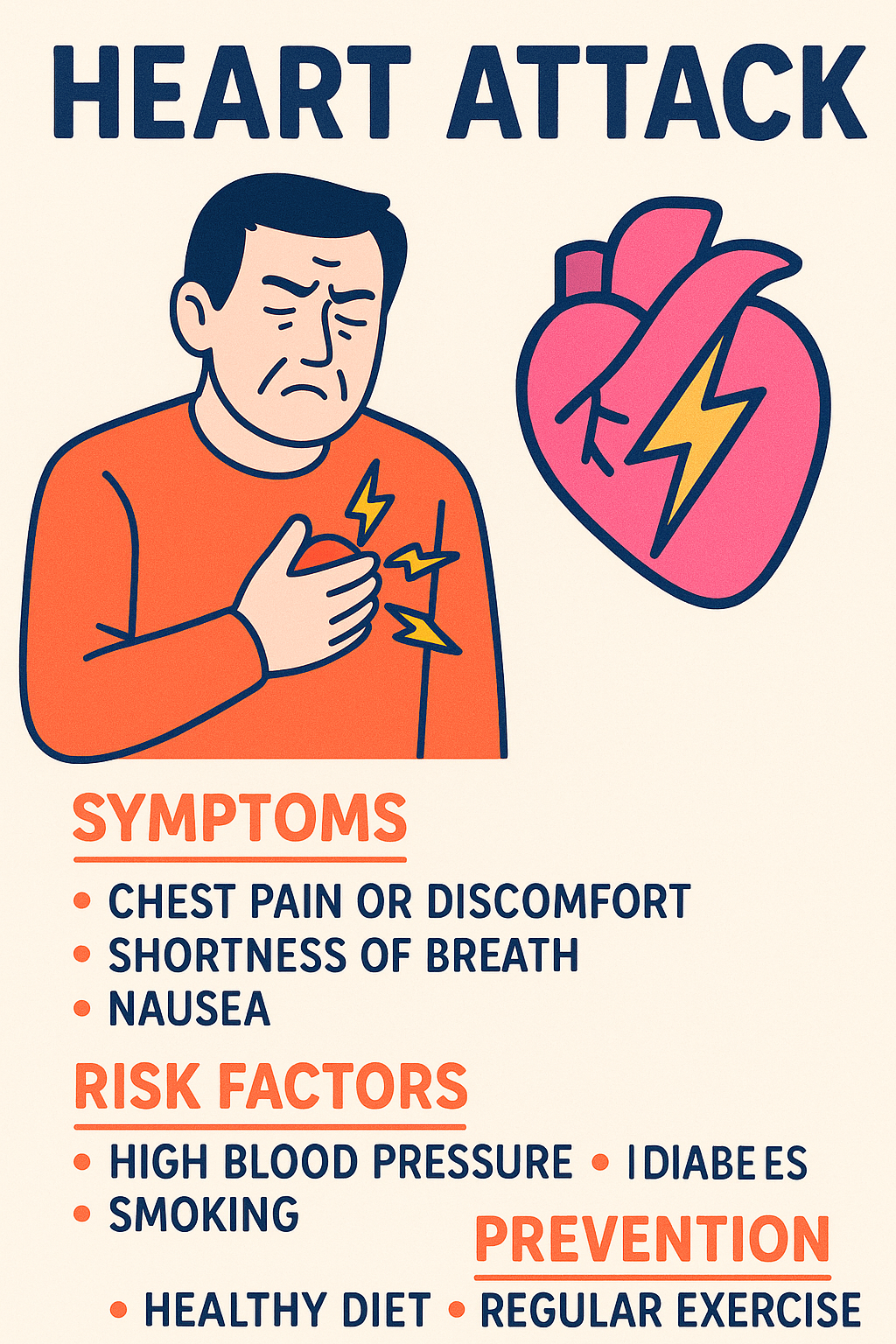
# **4. Risk Factors**
### **Modifiable**
* Smoking
* Hypertension
* Diabetes mellitus
* High LDL cholesterol
* Obesity
* Sedentary lifestyle
* Poor diet
* Stress
* Alcohol
### **Non-modifiable**
* Age > 45 in men, > 55 in women
* Family history of early CAD
* Male gender
* Post-menopausal females
---
# **5. Pathophysiology (Very High-Yield)**
1. **Fatty streak formation**
2. **Atherosclerotic plaque develops**
3. **Plaque rupture or erosion**
4. **Platelet aggregation → thrombus**
5. **Complete or partial obstruction**
6. **Ischemia → cell death within 20–40 minutes**
### **Timeline of Myocardial Cell Death**
* **0–30 min:** Reversible injury
* **30–40 min:** Irreversible injury begins
* **2–4 hrs:** Coagulative necrosis
* **24 hrs:** Neutrophils accumulate
* **3–7 days:** Macrophages
* **1–2 weeks:** Granulation tissue
* **>2 weeks:** Scar formation
---
# **6. Clinical Features**
### **Cardinal Symptoms**
✔ **Chest pain** (classical)
* Pressure, squeezing, burning
* Left-sided or central
* Radiates to **left arm, jaw, back, shoulder**
* Duration **>20 minutes**
### **Associated Symptoms**
* Shortness of breath
* Sweating (diaphoresis)
* Nausea, vomiting
* Palpitations
* Weakness, fear of death
### **Atypical Symptoms**
* Epigastric pain
* No pain (silent)
* Common in diabetics and elderly
---
# **7. Diagnosis**
## **A. ECG**
Most important first test
✔ **STEMI** → ST-elevation
✔ **NSTEMI** → ST-depression / T-wave inversion
✔ Inferior MI → II, III, aVF
✔ Anterior MI → V1–V4
---
## **B. Cardiac Biomarkers**
### **Troponin I/T**
* Most sensitive & specific
* Rises: 3–6 hrs
* Peaks: 12–24 hrs
* Stays elevated: 7–10 days
### **CK-MB**
* Rises: 4–6 hrs
* Peaks: 18 hrs
* Returns to normal: 2–3 days
* Useful for **reinfarction**
---
## **C. Other Investigations**
* Echocardiography – wall motion abnormality
* Coronary angiography – definitive test
* Chest X-ray – rule out other causes
* Blood tests – glucose, lipids, CBC
---
# **8. Treatment (Emergency Management)**
## **Prehospital**
✔ **Aspiring 325 mg (chewable)**
✔ **Oxygen if SpO₂ < 90%**
✔ **Nitroglycerin** (unless hypotensive)
✔ **Morphine** (for pain)
---
## **Hospital Treatment**
### **A. For STEMI**
🔶 **Primary PCI (angioplasty)** within **90 minutes** = best treatment
OR
🔶 **Thrombolysis** if PCI unavailable
* Tenecteplase
* Alteplase
* Streptokinase
### **B. Medications**
* **Aspirin + P2Y12 inhibitor** (Clopidogrel / Ticagrelor)
* **Heparin / Enoxaparin**
* **Beta-blockers**
* **Statins (High dose)**
* **ACE inhibitors**
* **Nitrates**
---
# **9. Complications**
## **Early Complications**
* Arrhythmias (most common cause of death)
* Cardiogenic shock
* Acute LV failure
* Pericarditis
* Papillary muscle rupture → acute MR
* Ventricular septal rupture
* Cardiac tamponade
* Reinfarction
## **Late Complications**
* Ventricular aneurysm
* Chronic heart failure
* Dressler syndrome (autoimmune)
---
# **10. Prevention**
### **Lifestyle**
* Quit smoking
* Exercise 30 mins/day
* Heart-healthy diet
* Maintain BP, sugar, and cholesterol
* Stress control
* Weight reduction
### **Medications for high-risk patients**
* Statins
* Aspirin (selected cases)
* Control BP/diabetes
---
Heart Attack (Myocardial Infarction) — 25 MCQs
Interactive quiz. Choose the best option and click "Next". At the end you can review correct answers.